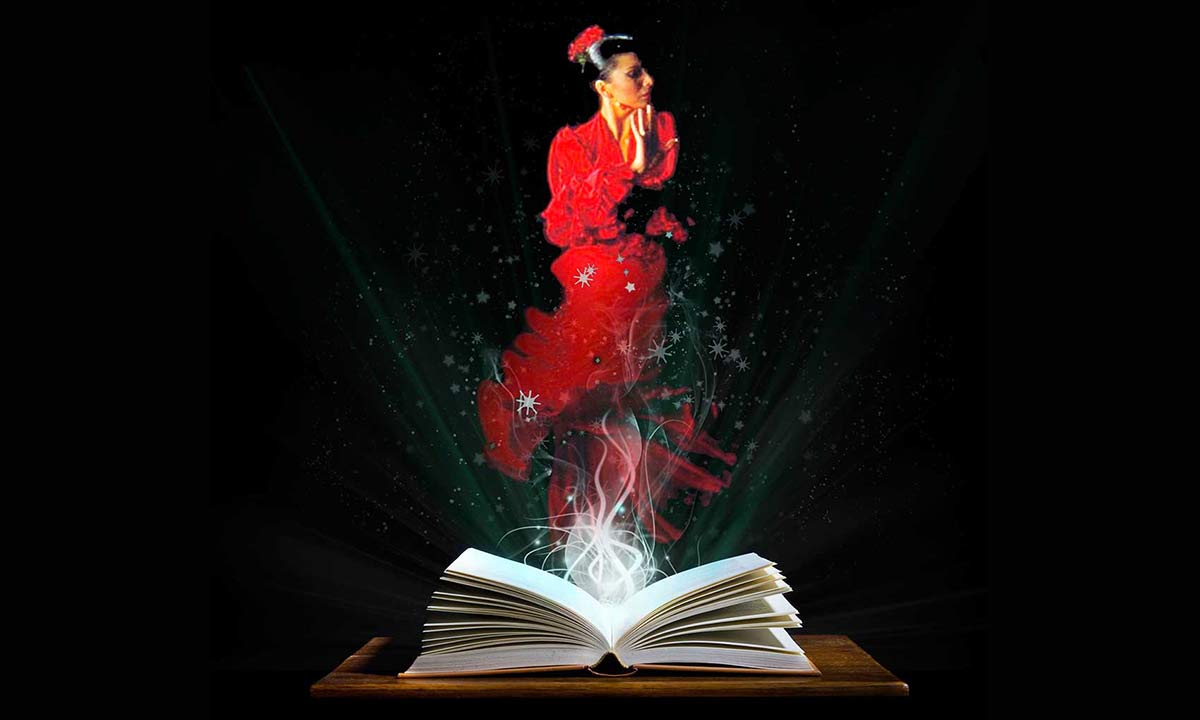
“The Mystics Dream" by Loreena McKennitt. One of Donna Darkwolf's favourite
songs from one of her favouite singers.
Donna Darkwolf - Casting the Sacred Circle.
“The Mystics Dream" by Loreena McKennitt. One of Donna Darkwolf's favourite
songs from one of her favouite singers.
Donna Darkwolf - Casting the Sacred Circle.
Now where do we do these rituals? There is much debate around this question.
I once heard someone put it quite elegantly: we can roughly divide modern
Pagans into two types: primal Pagans (the Celts and the nomadic Viking
invaders) and temple Pagans (who worshipped the great Greek, Roman and
Egyptian pantheons).
These two schools differ in terms of their preference of location.
The more hardy may fancy braving the cold and work hard at synchronising
their chattering teeth in their quest for divine illumination. Others would
rather work in the moderate temperature of their homes, allowing them the
freedom to alternate between levels of consciousness more easily.
I personally do not like getting up at three in the morning, climbing
treacherous rocky paths up a mountain, carrying heavy food parcels and
paraphernalia to see the sunrise. The idea of bugs creeping up my legs
as I try to meditate puts me off. (No, I’m not so advanced that I can just
switch off!) And no toilets! Give me a sunset in a beautiful garden any
day.
Of course, if both sets get together and feel that the weather is moderate
enough for outdoor ritual activity, and find an agreeable location, then
the ritual can be highly successful.
The most powerful rituals take place where two or more of the Elements
cross, for example at the sea, which is Earth, Air and Water, or on a mountain,
which is Earth and Air.
Wherever you choose to do your work, you will need to have dedicated space.
It doesn’t matter if this is only a tiny corner in your bedroom, or the
edge of your desk at the office for that matter. It may be a dedicated
room in a house, or even a permanent temple.
You may have a permanent stone circle in your garden, for example.
This is a vital component of any ritual. It is usually achieved through
a meditation or guided pathworking. Drumming, soft chanting or dancing
sequences may also be employed. These dancing sequences should not be confused
with the raising of energy.
Ritual awareness or consciousness is a heightening of the senses, and
expanded awareness of the non-physical world, a linking with Nature and
the forces behind all conceptions of deity.
It is an aid to prepare us for the energy raising and the working; until
this point we might still be carrying our problems from the day into the
circle.
This is a problematic area - one around which much debate revolves. Some
highly evolved Shamans use substances during rituals; Native Americans,
for example, use peyote.
Similar use is evident in our traditional communities here, but substances
are used under strict supervision if the person is in training. Natural
substances (such as marijuana) are used here by Shamanic types and other
Pagans.
This is not to say that all weed smokers are Shamans (although, in my
experience, they tend to like to think they are!). The use of chemical
substances (such as LSD) to induce trance states is generally unacceptable,
and the data collected is deemed false, no matter how mystical or ecstatic
the experience may have seemed. Wiccans regard the use of any substance
to induce shifts in consciousness as anathema.
They prefer to reach heightened states through natural means.
Wherever you do your rituals and whether you practise skyclad or not,
there are some underlying principles for success in your ritual. By ‘success’
I mean obtaining the desired outcome, especially if you are using your
ritual for a magickal outcome.
Ritual may be elaborate or simple. It may be exceptionally simple, such
as sitting next to a tree and meditating, or as complex as a Latin High
Mass. It may be tribal in nature, with drums, fires and feasting, or it
may be a complex ceremonial temple setting.
There should be no random design. In other words, spontaneous ritual may
occur, but this is rare and generally the domain of the more experienced
practitioner. Always balance discipline with spontaneity. The concept of
mirth should always be balanced with reverence.
Many of us have suppressed Calvinistic backgrounds and approach ritual
with trepidation; sometimes our mirth is even subconsciously feigned.
We often forget the words of the Charge of the Goddess:
‘And all acts of pleasure shall be my ritual, and there shall be music,
making love and feasting.’ There should always be an equilibrium between
dogma (as agreed by the participating group beforehand) and spontaneity.
Most of us must plan carefully, for the physical and visible activities
that surround our ritual will impact on the invisible actuality that will
happen as a result.
There must be conscious participation. In other words, you need to participate
consciously and soberly and collaborate with the spirit world.
Ritual is not something that is done to you; rather it is something you
do. In other words, there is full participation, not only with the spirit
world, but also with your mind, body, emotions and psychology — in short,
all of you.
There should be no observers, as they detract from your focus, and even
if you feel that you are disciplined and focused enough not to let them
affect you, they may interfere with the energies raised from their side
— not your side. However, this is not to say that there can’t be observers
at an open Sabbat/festival, where one of the objectives is to create positive
public awareness of Pagan rites.
Rituals are usually led by a priestess and/or a priest. It’s important
to remember that we are all priests and priestesses in the Craft, but within
a ritual, someone takes the responsibility for the smooth flow of the event.
This person may be the designated high priestess of the coven, or designated
for that specific ritual.
They should be experienced, as they need to guide and ground the flow
of energy. They may need to alter or adapt the agreed-to ritual in parts
on account of unforeseen circumstances.
For example, a spirit guide may visit one in the group and impart a message
or messages that could change the ritual working; or during a visualisation
the entire group could ‘see’ the same thing or similar things that will
alter the dynamics substantially.
Most Pagan rituals take place in a circular fashion. This is unlike the
mono-theistic approaches, which typically take place in a square shape,
where the people sit on one side of an invisible line, and a priest mediates
at an imaginary line between the people and God. The circle allows for
energy flow and, of course, it is both the psychic barrier of protection
and the containment of energy raised.
All members participating in any ritual should agree upon its structure.
It is vital that the intent of the ritual be understood by all equally,
for this will determine the method to be used by all. Not only this, but
unless you are involved in a group that you trust, it alleviates discomfort
and the unhappy situation of wanting to leave halfway through the event.
The following are the steps that typically take place in ritual. Some
books may amalgamate these steps. Please note that these steps follow in
order, although certain processes may occur at the same time. Some of these
steps will be discussed in detail, while others have already been discussed
elsewhere in this book.
Preparation: This may include fasting, mental preparation and
focus before the ritual. Individuals can prepare for days before the ritual,
or just a few hours before (e.g. with a visualisation or chakra exercise).
Purification: This may involve a purification or cleansing exercise
(e.g. bathing in salt water), just before the ritual.
Cleansing the Sacred Space : Before the ritual event, the space
may be swept, anointed or smudged. This is an ancient Shamanic technique
(practised especially by Native Americans). It involves the use of a smudge
stick (made from selected dried herbs) or a bunch of joss sticks (incense
sticks). This is set alight until it smokes profusely. With the aid of
a large feather, the stick is taken around the perimeter of the circle
or around a person’s body, cleansing the space or the person’s ‘aura’ of
negative energies and readying the space or person for the rite.
Casting the Circle and Welcoming the Elements Are also covered
in detail in the next chapter.
Many people use the terms ‘evocation’ and ‘invocation’ interchangeably; however, they are two different techniques. Invocation is the process of inviting an entity or spirit to take over your body. It can result in channelling and mediumship. Greater/higher beings are invoked; lesser spirits are evoked. So, deities are invoked. To invoke is to call ‘in’ or ‘down’. In terms of the God or Goddess, it involves the ‘invoker’ drawing the Divine energy into his or her body. Alternatively, the ‘invoker’ can draw Divine energy into the body of the priéstess.
Certain images are focused on, in order to stimulate the imagination.
Raising energy and grounding: Raising energy and grounding can be done
in many ways — by singing, drumming, shouting, dancing or clapping. Certainly
one of the most popular ways (especially if you are working in a group)
is to move around in a circle, spinning faster and faster until you all
fall to the ground naturally.
At the time of falling, when your hands or palms touch the floor, you
feel yourself connect with the Earth again, and focus on the reason for
being there - the reason for spinning, falling and grounding. It involves
sending your energy out into the Universe.
Communion or Thanksgiving: Known as ‘cakes and ale’ in Wiccan
circles, this is a very practical intervention at the end of the ritual.
Here, participants ‘step down’, as it were, from the working of the circle
and back into ordinary reality.
The eating and drinking is a realisation that we are still of this world.
After magickal work, one tends to be a little light-headed. As well as
a ‘grounding’ exercise, it is also an act of endorsement of masculine and
feminine energies.
Feasting: Feasting is An Essential Part of Pagan Ritual
Banishing the Elements and bidding farewell to the deities: This is the
‘closing’ of all things invoked (opened), i.e. the quarters and the deities.
Pagans bid them farewell and ‘close down’ the energy that they have brought
in.
Closing the Circle: The energy raised during the ritual must
be diffused, like snuffing out a candle or quelling a fire.
Can you get ritual wrong? It is unlikely. The worst that can happen is
that nothing can happen. The ritual will simply be empty and yield no results.
Young students entering the Craft are often nervous.
They are worried that they may be using the wrong colour in the wrong
quarter, or invoke an incorrect deity for a particular ritual. This sort
of concern is unnecessary. We must remember that it is the intent that
counts, and until your knowledge is more developed, there is a karmic process
that will protect you.
However, having said this, more experienced practitioners will know that
things can go wrong. Innocent intent may yet yield undesired results if
the correct ‘ingredients’ and questions are not applied.
Calling up spirit forces of which you have little knowledge or which you
intend to use for dubious purposes can work against you.
Finally, ritual should be practical.
It’s fine to read ostentatious books on the subject of ritual and fantasise
about Egyptian or medieval temple-type layouts and misty stone groves,
but if it’s not practical, forget it.
One of the most impractical rituals 1 ever attended was a beach ritual.
This is a lengthy story, but I include it as it contains a number of humorous
‘don'ts’ that serve as lessons for what should be done.
Extracted from “Dancing Under an African Moon” by Donna Darkwolf Vos
Published 2002
Magickal orders have existed in South Africa since the establishment of
Freemasonry and Rosicrucianism. The Golden Dawn has been represented in
South Africa for a long time, and the Order of Oriental Templars (OTO)
also has representatives. Both the Golden Dawn and the OTO are fairly secretive,
with very few known members.
In 1999, two orders went quite public. This was because certain practitioners
started to bring them into the public arena. These were the OTO and the
Illuminates of Thanateros (IOT).
They arrived publicly on the scene almost simultaneously, although there
were a few isolated practitioners practising their traditions secretly
before that. Their public appearance had a certain impact on some Pagan
practitioners, who hastily attempted to make their current practice compatible
with those of the new magickal orders.
Most Pagans and Wiccans are not involved in any of these orders. But some
cross over easily. It's important to mention that a number of Pagan practitioners
can also be called magicians. They walk a fine line in terms of their definition
of divinity, acknowledging a force higher than themselves and also adhering
to the personal god within.
In fact, many Wiccans shy away from high magickal practice, fearing its
association with the negative left-hand path. They generally prefer the
safety of the structure surrounding low magickal practice.
Extracted from “Dancing Under an African Moon” by Donna Darkwolf Vos.
Published 2002. By Zebra Press. Cape Town.
Go to the PART THREE of Donna Darkwolf's Big Book of Spells >>
Go to the beginning of Donna Darkwolf's Big Book of Spells <<


